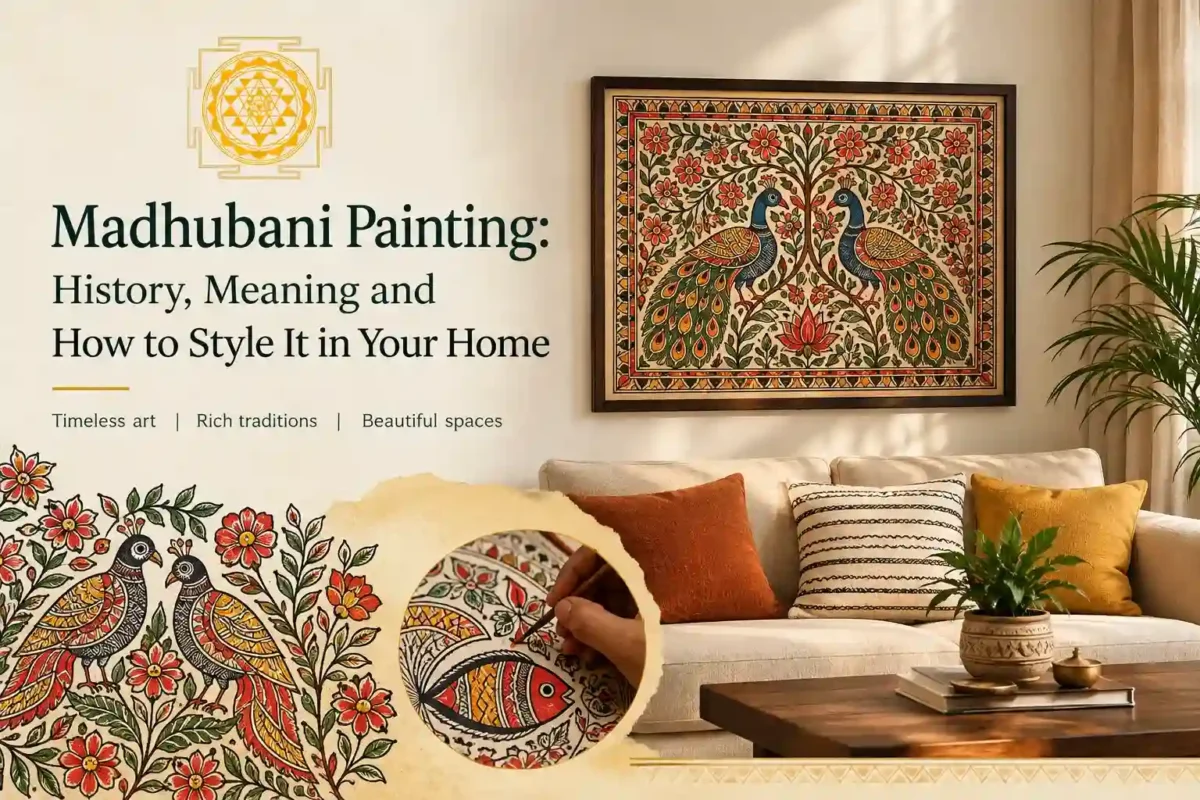
Buying art should feel exciting, not confusing. Perhaps you are looking for a colourful painting to brighten your living room, a traditional Indian artwork that reminds you of home, or an original piece that reflects your personal taste. Whatever brings you to Indian art, finding the right artwork online starts with knowing what to look for.
Indian art offers an extraordinary range of styles, from intricate folk paintings and spiritual imagery to contemporary abstract compositions and expressive oil paintings. Each artwork has its own character, technique and story.
For buyers in the UK, shopping online makes it possible to explore art created by artists in India without visiting a physical gallery. However, it is worth understanding the difference between original paintings and prints, how to assess a seller’s information, and what to check before placing an order.
In this guide, we explain how to buy original Indian art online in the UK, choose a style that suits your home, understand materials and authenticity, and plan for delivery and aftercare.
Why Buy Indian Art Online?
Art can change the atmosphere of a room. It can introduce colour, create a focal point or bring a personal connection to your surroundings.
Indian art is particularly varied. Some works feature detailed patterns and traditional motifs, while others explore modern forms, textures and colours. This variety makes it possible to find artwork for many different interiors and budgets.
Buying Indian art online also offers several practical advantages.
Explore different artistic traditions: Discover traditional Indian paintings, regional folk art, contemporary artwork and decorative crafts in one place.
Find artwork for your space: Browse different sizes, colours, themes and formats before deciding what suits your room.
Learn about the artist: Detailed product descriptions and artist profiles can help you understand the background and creative approach behind a piece.
Shop at your own pace: Compare artworks, read product information and consider your options without feeling rushed.
Discover distinctive pieces: Original artwork can offer something more personal than choosing a mass-produced decoration simply because it matches your furniture.
If you are beginning your search, explore our art collection to discover different painting styles and artwork that may suit your home.
Original Indian Art vs Prints: What Is the Difference?
One of the most important things to understand before buying art online is the difference between an original artwork and a reproduction.
The two can look similar in product photographs, but they are not the same.
What is an original painting?
An original painting is a work created by an artist rather than a reproduction of an existing image. It may be produced using oil, acrylic, watercolour, natural pigments or other artistic materials.
Original paintings can contain subtle variations in brushwork, texture, linework and colour. These details may be more apparent when viewed in person.
When shopping online, look for information about the artist, medium, dimensions and whether the artwork is described as an original piece.
What is an art print?
A print is a reproduced image of an artwork, typically produced through a printing process. Prints can be attractive and accessible options for decorating a home.
Some prints are produced in limited editions, while others are made in larger quantities. A limited-edition print is not the same as a unique original painting.
Neither option is automatically better than the other. The right choice depends on what you want, how you plan to display it and your budget.
What about handmade paintings?
The term “handmade” can describe different processes. An artist may paint an entire piece by hand, use a combination of hand-painted and printed elements, or create a handmade decorative item based on a traditional design.
If you specifically want a fully hand-painted original, check the product description and ask the seller to clarify the production process when necessary.
A clear description should help you understand exactly what you are purchasing.
Explore Different Types of Indian Art
Indian art encompasses many regional traditions, techniques and contemporary approaches. Understanding a few broad categories can help you narrow down your search.
1. Traditional Indian paintings
Traditional Indian paintings often draw on regional artistic practices, religious stories, folklore, nature and ceremonial traditions.
Depending on the style, you may find intricate linework, decorative borders, detailed figures and distinctive colour combinations.
Madhubani, Warli and Pattachitra are examples of recognised Indian folk-art traditions, each with its own visual characteristics and cultural context.
Traditional artwork can work beautifully in a living room, hallway, study or personal collection. When buying, look beyond the subject and consider the technique, artist and story behind the piece.
2. Oil paintings
Oil paintings are created using pigments mixed with drying oils. The medium can produce rich colours, layered surfaces and a wide range of textures.
Indian oil paintings may feature landscapes, portraits, figurative subjects, cultural themes or contemporary compositions.
If you prefer expressive brushwork or a painting with depth and texture, explore our oil paintings. Check the listed dimensions, medium and whether the work is supplied framed or unframed.
3. Abstract paintings
Abstract art explores colour, form, line, texture and composition without necessarily depicting recognisable subjects.
Some works are bold and energetic, while others are subtle and restrained. Indian abstract art can combine contemporary approaches with cultural references, materials or influences.
If your home has a modern interior, abstract paintings can create a focal point without requiring the rest of the room to follow a particular theme.
Browse our abstract paintings to find artwork that complements your preferred colours and interior style.
4. Handicraft paintings and ethnic crafts
Indian artistic traditions extend beyond paintings on canvas or paper. Decorative crafts can include hand-painted objects, carved pieces, textiles and other items made using regional techniques.
These pieces may introduce texture and craftsmanship to shelves, side tables and display areas.
Explore our handicraft paintings and ethnic crafts if you are interested in decorative artwork and craft traditions as well as conventional wall paintings.
When buying crafts, check the materials, dimensions, intended use and whether each item is handmade, hand-finished or produced using another method.
How to Check Whether an Indian Painting Is Original
You do not need to be an art expert to make a more informed purchase. A few careful checks can help you understand what a seller is offering.
Check the artist’s information
Look for the artist’s name, biography, artistic background and other available works.
An artist profile can help you understand their preferred techniques, subjects and creative approach. It also gives you a starting point if you want to learn more about the person who made the artwork.
Visit our artist section to explore artist information and discover the people behind the art, where profiles are available.
Keep in mind that a detailed biography alone does not prove that a particular painting is original. The product listing should identify the artwork and its production process clearly.
Read the product description carefully
A useful listing should provide:
- The artwork’s title, where applicable.
- The artist’s name, if known.
- The medium, such as oil, acrylic or watercolour.
- The dimensions and orientation.
- Whether the work is original, a print or a mixed-media piece.
- Whether the artwork is framed.
- Information about the signature or certificate of authenticity, if applicable.
- Details about packaging, shipping and returns.
If important details are missing, ask the seller before placing your order.
Examine the photographs
Good product photographs should help you understand the artwork’s appearance and scale.
Look for images showing the complete painting, close-up details and, where available, the artwork displayed in a room.
For textured paintings, a close-up can help you assess visible brushwork and surface detail. However, photographs cannot always establish authenticity, so use them alongside the written description and seller information.
Understand certificates of authenticity
Some artists and galleries provide certificates of authenticity. These may include the artist’s name, title, medium, dimensions, date and other identifying information.
A certificate can support the documentation of an artwork, but its value depends on who issued it and what it confirms. Do not assume that every genuine artwork must come with a certificate or that a certificate alone guarantees authenticity.
For a higher-value purchase, you may want to request additional provenance information or independent advice.
Ask questions when something is unclear
A reliable seller should be willing to explain what is included in a purchase.
Before buying, you could ask:
- Is this a one-of-a-kind original or a reproduction?
- Who created the artwork?
- What materials and techniques were used?
- Is the painting signed?
- Is framing included?
- How will the artwork be packaged and shipped to the UK?
- What happens if it arrives damaged?
Clear answers can help you decide whether the artwork meets your expectations.
How to Choose the Right Indian Art for Your Home
The best artwork is not necessarily the most expensive or the one currently in fashion. It is the piece that works for your space and that you genuinely enjoy looking at.
Consider the room’s colours
Look at your walls, furniture, rugs and soft furnishings.
If your room is mostly neutral, a colourful traditional painting may create an eye-catching focal point. If you already have strong patterns and bright colours, a more restrained composition may provide balance.
You do not need to match every shade. A complementary colour, repeated accent or shared material can be enough to connect the artwork with the rest of the room.
Choose the right dimensions
Before ordering, measure the available wall space.
A large painting may work above a sofa or sideboard, while a smaller piece can suit a hallway, reading nook or compact bedroom.
Pay attention to the dimensions listed on the product page. Check whether the measurements include the frame, and consider the additional space required if you plan to have the artwork professionally framed.
Think about the subject
Choose a subject that fits your interests and the atmosphere you want to create.
Nature-inspired artwork can introduce an organic feel. Traditional or spiritual paintings may have cultural or personal significance. Abstract artwork can add visual interest without depicting a specific subject.
If you are choosing religious or ceremonial art, consider its meaning and display it in a way that feels appropriate to you.
Decide whether you want a statement piece or a collection
A single large painting can become the main feature of a room.
Alternatively, several smaller works can form a gallery wall. You might combine traditional Indian art with contemporary paintings, photographs or botanical prints.
To create a cohesive arrangement, consider using similar frames, a shared colour palette or consistent spacing. Lay out the pieces before hanging them to see how they work together.
What Should You Know About Buying Indian Art from India to the UK?
Buying artwork internationally involves more than selecting a painting. Delivery, packaging, customs and potential import charges are important considerations.
Check the delivery arrangements
Before ordering, confirm whether the seller ships to your UK address and whether the quoted delivery cost includes packaging and handling.
Ask for an estimated delivery timeframe and check whether the painting will be shipped rolled, flat or framed. The best method depends on the artwork’s medium, size, support and condition.
A framed painting may require additional protective packaging. A delicate work on paper may need different handling from a painting on canvas.
Do not assume that every artwork can be safely rolled or that removing a frame is always appropriate.
Understand customs and import charges
Depending on the artwork, how it is classified, its value and the terms of sale, an international order may involve import VAT, customs formalities or other charges.
The treatment of original works of art can differ from that of reproductions, prints, decorative crafts and other goods. Rules and applicable rates may also change.
Before purchasing, check the current UK government guidance on importing goods and confirm with the seller or delivery provider who is responsible for customs declarations and any charges.
Ask whether the quoted price includes applicable taxes and delivery costs. If it does not, find out what additional charges might apply.
For official information, consult the UK government’s guidance at GOV.UK on importing goods into the UK.
Check the packaging and insurance
Artwork can be vulnerable to impact, moisture and handling during transport.
Ask how the seller protects the painting and whether suitable transit insurance is available. For a valuable piece, confirm the level of cover and any exclusions before ordering.
When your artwork arrives, inspect the package and painting promptly. Photograph any visible damage and contact the seller or delivery provider according to their claims process.
Keep the packaging and order documents until you are satisfied with the condition of the artwork.
Read the returns policy
International returns can be more complicated and expensive than domestic returns.
Before buying, check the return window, eligibility conditions, who pays return shipping and how refunds are handled.
If an artwork is damaged, incorrect or materially different from its description, different consumer rights may apply. Do not assume that a seller’s general returns policy removes any rights you have under applicable law.
For UK consumer guidance, consult the relevant information on GOV.UK or Citizens Advice.
How Much Does Original Indian Art Cost in the UK?
There is no single price for original Indian art. Cost depends on several factors, including:
- The artist’s experience and reputation.
- The size of the artwork.
- The medium and materials used.
- The time and complexity involved in creating the piece.
- Whether the work is framed.
- Shipping, packaging and any applicable taxes or import charges.
Smaller paintings may be more accessible, while larger or more detailed works by established artists may cost considerably more.
Rather than judging an artwork by size alone, consider the quality of the work, the artist’s information, the materials and the documentation provided.
It is also useful to compare the total delivered cost rather than the artwork’s listed price alone. This helps you avoid surprises when shipping and other charges are added.
Set a budget before you begin browsing, but leave some flexibility for framing or display requirements if necessary.
How to Care for Your Indian Painting
Once your artwork arrives, a little care can help preserve its appearance.
Avoid prolonged direct sunlight. Light can fade some pigments and damage certain materials over time.
Keep the artwork away from damp areas. Excess moisture and rapid environmental changes may affect paper, canvas, paint and framing materials.
Use suitable hanging hardware. Make sure the wall and fixings can safely support the artwork’s weight.
Dust carefully. Follow the artist’s or seller’s instructions, and avoid using water or household cleaning products on painted surfaces.
Consider professional framing. Works on paper may benefit from appropriate protective glazing and archival-quality materials, depending on their needs.
If you own a valuable, fragile or older painting, consult a professional framer or conservator for advice specific to the artwork.
Common Mistakes to Avoid When Buying Indian Art Online
A few simple precautions can make your buying experience more straightforward.
Choosing from photographs alone: Images are useful, but read the description and check the dimensions, materials and seller information.
Assuming every handmade item is an original painting: Handmade crafts, original paintings and printed reproductions are different categories. Confirm what you are buying.
Ignoring the total cost: Include shipping, possible import charges, framing and installation in your budget.
Overlooking the return policy: Understand the conditions before paying, especially when ordering internationally.
Buying without considering the display space: Measure the wall and check the artwork’s orientation before ordering.
Treating cultural art as just a colour scheme: Learn about the artwork’s subject, artist and tradition. This can help you make a more thoughtful choice and appreciate the piece beyond its decorative qualities.
Frequently Asked Questions
Where can I buy original Indian art online in the UK?
You can explore online art galleries and specialist retailers that provide clear artwork descriptions, artist information, materials, dimensions and delivery policies. Before buying, confirm whether a piece is an original painting or a reproduction and check that the seller delivers to your UK address.
How can I tell whether an Indian painting is original?
Review the artist’s information, product description, medium, photographs and any available provenance or authenticity documentation. Ask the seller for clarification if the listing does not explain whether the work is an original or a print. No single detail, including a signature or certificate, guarantees authenticity on its own.
Is Indian art suitable for modern interiors?
Yes. Traditional paintings can work alongside contemporary furniture, while abstract Indian art can suit minimalist or modern spaces. Consider the artwork’s colours, size, subject and relationship with the rest of the room.
Can I buy Indian paintings directly from artists in India?
Some artists and galleries sell directly to international customers, while others work through specialist retailers. Check who is selling the artwork, who created it, the delivery arrangements and whether the seller can provide the documentation you need.
Will I have to pay customs charges when buying art from India?
Potential charges depend on the type of artwork, its classification, value and applicable UK rules. Confirm the delivery terms and responsibility for taxes or customs formalities before placing an order. Consult current GOV.UK guidance for the latest information.
What is the difference between traditional Indian art and contemporary Indian art?
Traditional Indian art often draws on established regional techniques, cultural practices, folklore and religious traditions. Contemporary Indian art can explore a wider range of modern subjects, materials and approaches. There is also considerable overlap, as artists may combine traditional techniques with contemporary ideas.
How should I display a newly purchased painting?
Choose a location away from prolonged direct sunlight and damp conditions. Use appropriate hanging hardware, allow enough visual space around the artwork and follow any care instructions supplied by the artist or seller.
Find Indian Art That Feels Right for You
Buying original Indian art online is an opportunity to discover new artists, explore different traditions and find a piece that brings something meaningful into your home.
Take time to understand the artwork, check its materials and dimensions, read the seller’s policies and calculate the full delivered cost. These small steps can help you make a more confident purchase.
Whether you prefer the detail of traditional Indian paintings, the texture of oil paintings, the energy of abstract art or the character of handmade crafts, there is a wide world of Indian creativity to explore.
Discover our art collection, learn more about our artist community and find artwork that reflects your interests, your home and your personal taste.
Explore TheIndoBritArts.com and start your journey into Indian art today.